How old are Vienna's homes?
The Town of Vienna's comprehensive plan puts it plainly: in the 1950s and 1960s thousands of homes were built in the town, and by the 1970s Vienna was mostly built out. The plan describes a housing stock primarily from the 1950s and 1960s, and single-family detached houses make up roughly 82% of the town's residential units. Many of those houses have been expanded over the decades, and their roofs show it.
The same plan notes a second trend: older single-family homes being torn down and replaced with new, larger houses. It counted 624 new single-family dwelling permits approved by the Town from 2006 to 2015, about 13.5% of all single-family homes. So a Vienna street can have a 1958 rambler on its third roof next to a 2015 house on its first. This guide is about the older ones.
A house that age is probably on its third roof
Asphalt shingle roofs commonly last 20 to 30 years. A house built around 1960 has typically been re-roofed at least once or twice. That matters in three ways. First, earlier roofers sometimes installed a new layer over the old one, so there may be two layers to remove. Second, flashing at chimneys and walls has often been reused or patched rather than replaced. Third, decades of small leaks may have quietly damaged the deck. None of this is visible from the driveway, which is why a good inspection and an honest scope matter.
Plank decking versus plywood
Many mid-century houses were built with board or plank decking, individual boards nailed across the rafters, rather than the plywood or OSB sheets used today. Plank decking can be perfectly serviceable. But boards can split, shrink apart, or rot where water has sat over the years, and gaps between boards matter to how a new roof is installed. Where the deck isn't sound enough for the new roof, damaged boards are replaced, and in some cases new sheathing goes over the old planks. Our decking guide explains the options.
Chimneys from the 1950s and 1960s
Masonry chimneys are common on Vienna homes of this age, and they're one of the most frequent leak points we see. The flashing that seals the roof to the chimney has often been patched with roofing cement or caulk instead of being properly rebuilt during earlier re-roofs. A replacement is the right time to do it properly. Our chimney flashing guide walks through what that involves.
Additions change the roof
Few 1950s Vienna houses still have their original footprint. Family rooms, sunrooms, second-story additions and garages added over the years often have their own roof, framed at a different time and sometimes at a different pitch. Where those roofs meet the original house is a classic leak point, and a low-slope addition roof may need a different roofing approach than the main roof. The Town lists additions and changes to roof height among modifications that go through its review, so if a re-roof is turning into a remodel, check first.
Ventilation that was never designed
Many mid-century houses had little in the way of designed attic ventilation, and later changes, like blown-in insulation over soffit vents or bath fans vented into the attic, can make it worse. A replacement opens up the ridge and exposes the deck, so it's the natural time to look at intake and exhaust together. We review ventilation on every full replacement, and we won't add vents just for the sake of it.
What to ask before you sign
- How many layers do you expect to remove, and what if there are more?
- How will damaged decking be identified, shown to me and priced?
- Will chimney and wall flashing be replaced, or reused?
- How will the addition's roof tie into the main roof?
- What ventilation changes, if any, are you recommending, and why?
- Who handles any permit or Town review?
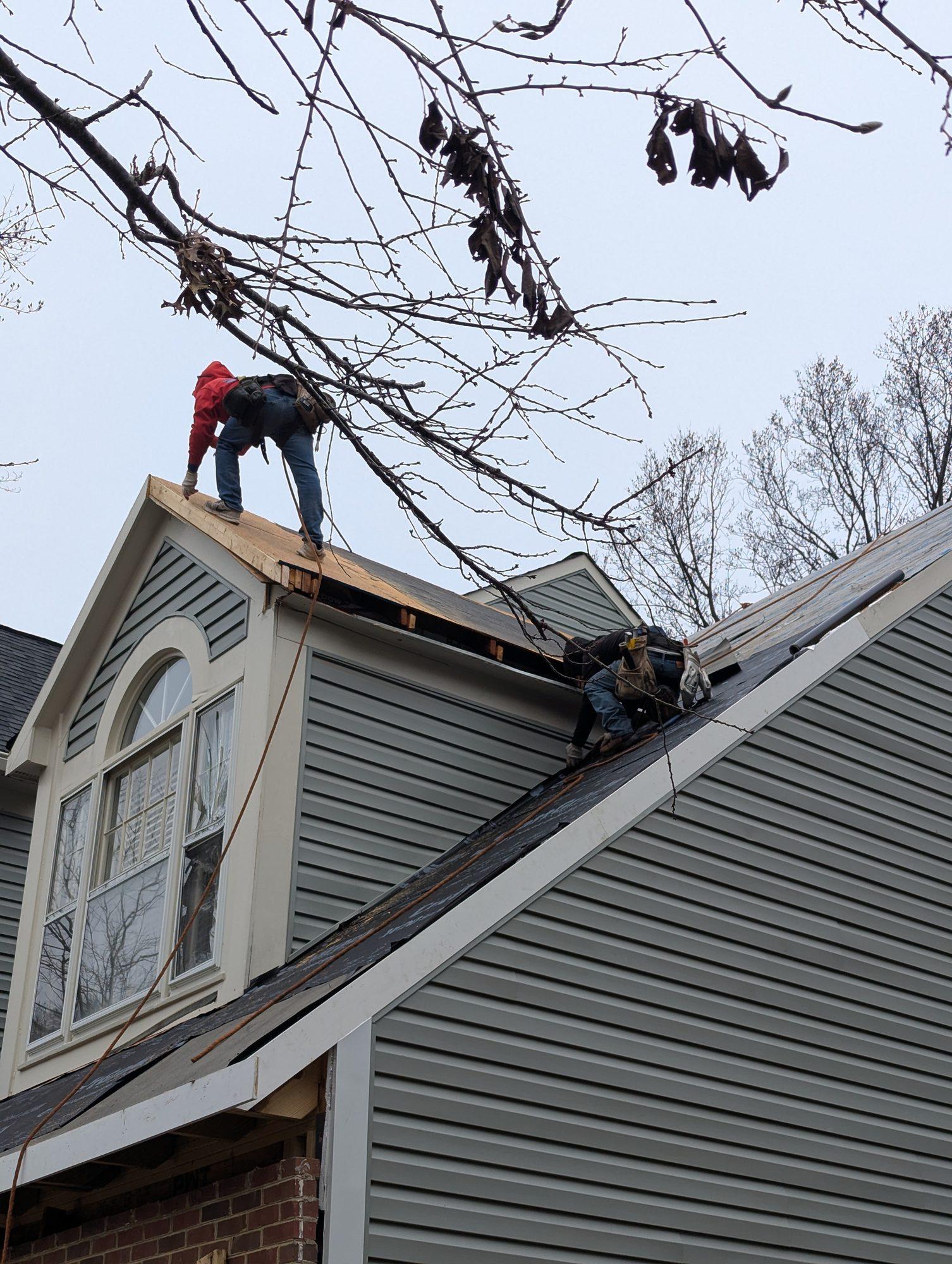
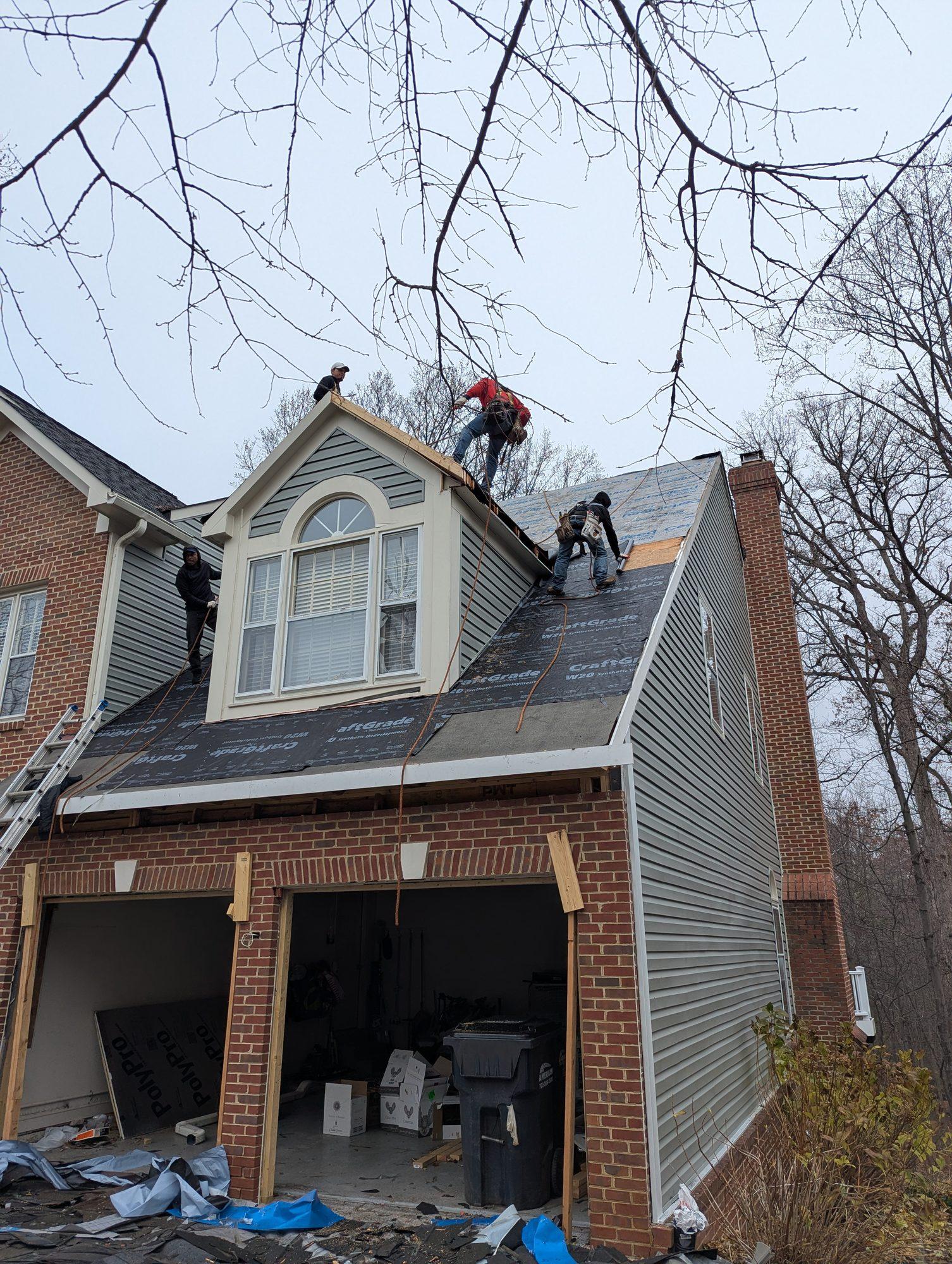
Tear-off to the deck and chimney and dormer flashing on a Roofing Roughnecks re-roof in Reston. Taking an older roof down to the deck is how hidden problems get found and dealt with.
Related pages
My Vienna house is from the 1950s. Does it need a new roof just because of its age?▸
No. The house's age doesn't decide it; the roof's age and condition do. A roof installed 12 years ago on a 1955 house may have plenty of life left. An inspection tells you.
Can you shingle over my existing roof?▸
Our full replacement scope is a tear-off down to the deck. On older homes especially, that's how decking and flashing problems are found instead of covered up.
Will my plank decking need to be replaced entirely?▸
Not necessarily. Often only damaged boards are replaced. Whether more is needed depends on what tear-off reveals, and the scope should explain how that decision will be made.
Do older homes cost more to re-roof?▸
They can, because of extra layers, decking repair and chimney flashing. They can also be simpler than a new multi-gable house. The cost guide shows the ranges and what moves them.