What the deck is
The roof deck, also called sheathing, is the layer of wood nailed across the rafters. Everything else, from underlayment to shingles, is fastened to it. On newer houses it's usually plywood or OSB sheets. On many of the 1950s and 1960s homes that make up most of the Town of Vienna's housing, according to the Town's comprehensive plan, it may be individual boards or planks. Either way, a roof is only as good as the deck it's nailed to: shingles fastened into soft wood don't hold.
How decking rots
- Slow leaks at chimneys, vents or valleys that soaked the same spot for years before anyone noticed.
- Poor attic ventilation, which lets moisture from the house condense on the underside of the deck in winter.
- Water backing up at the eaves behind clogged gutters, rotting the first few feet of deck.
- Damage left behind by an earlier re-roof that went over the problem instead of fixing it.
Signs before tear-off
Some decking problems announce themselves. From the ground, you might see a sag or dip between rafters, or a wavy roof line. In the attic, dark staining, soft or crumbling wood, or daylight through gaps between boards are warning signs. During an inspection, a roofer may feel spongy spots underfoot. But most decking damage is only fully visible once the old roof is removed, which is why no honest estimate can promise the exact amount in advance.
What happens at tear-off
Once the old shingles and underlayment are off, the deck is exposed and checked. Damaged sections are marked. Good practice is to show the homeowner what was found, with photos if you're not home, before the extra work proceeds, according to whatever the written scope says. That's the moment where a clear scope pays off: you already know how the work will be handled and priced, so it's a quick decision instead of a negotiation with a crew waiting on the roof.
What replacing sheathing involves
The damaged boards or sheets are cut out back to solid framing, and new sheathing is fastened to the rafters, sized to match the surrounding deck. On plank decks, a contractor may replace individual boards, or in some cases install new sheathing over the planks if the deck as a whole isn't suited to the new roof. If rot has reached a rafter, that's a framing repair, which is a different scope again and should be discussed separately. Once the deck is sound, underlayment and the new roofing go on as normal.
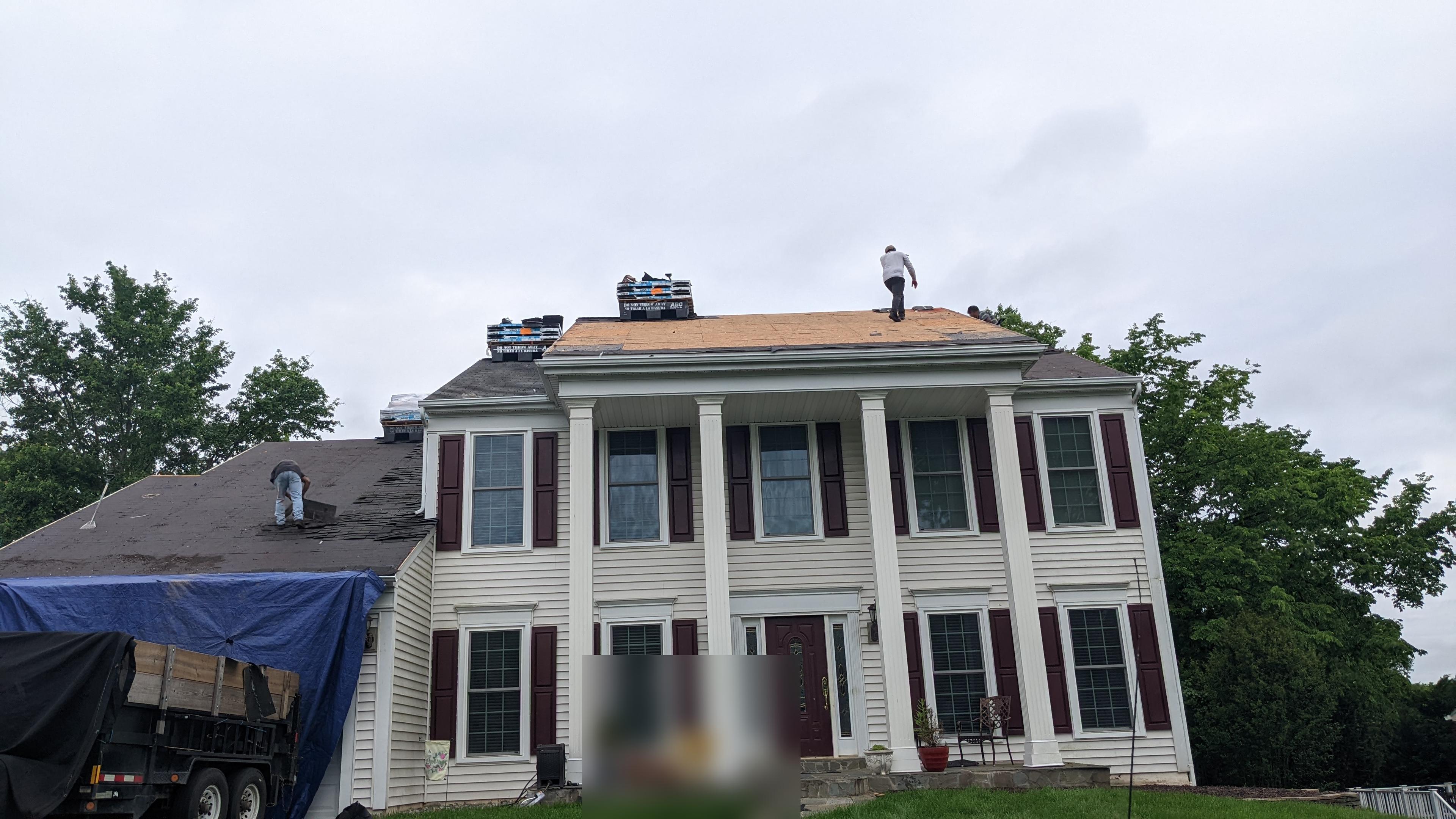
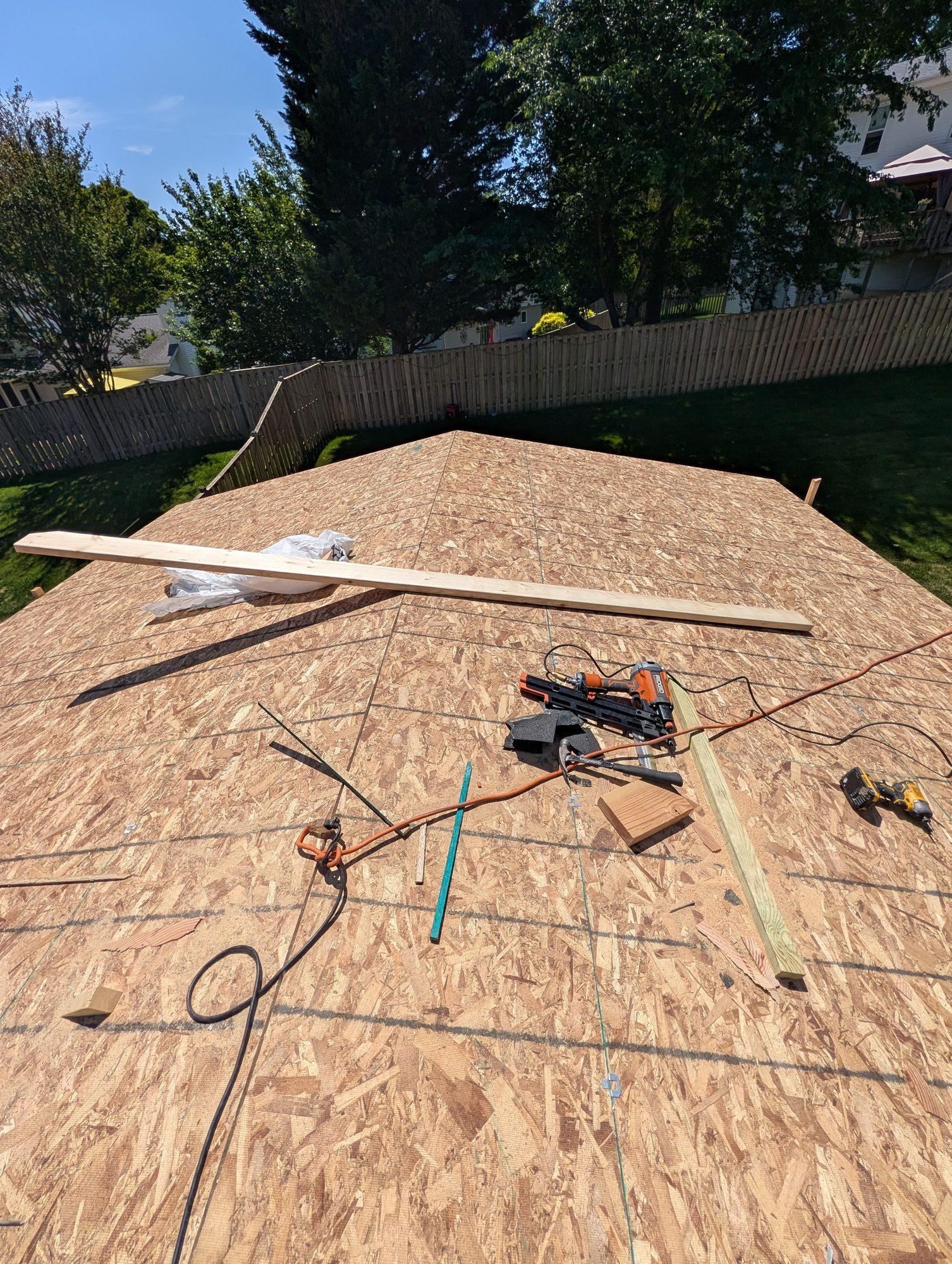
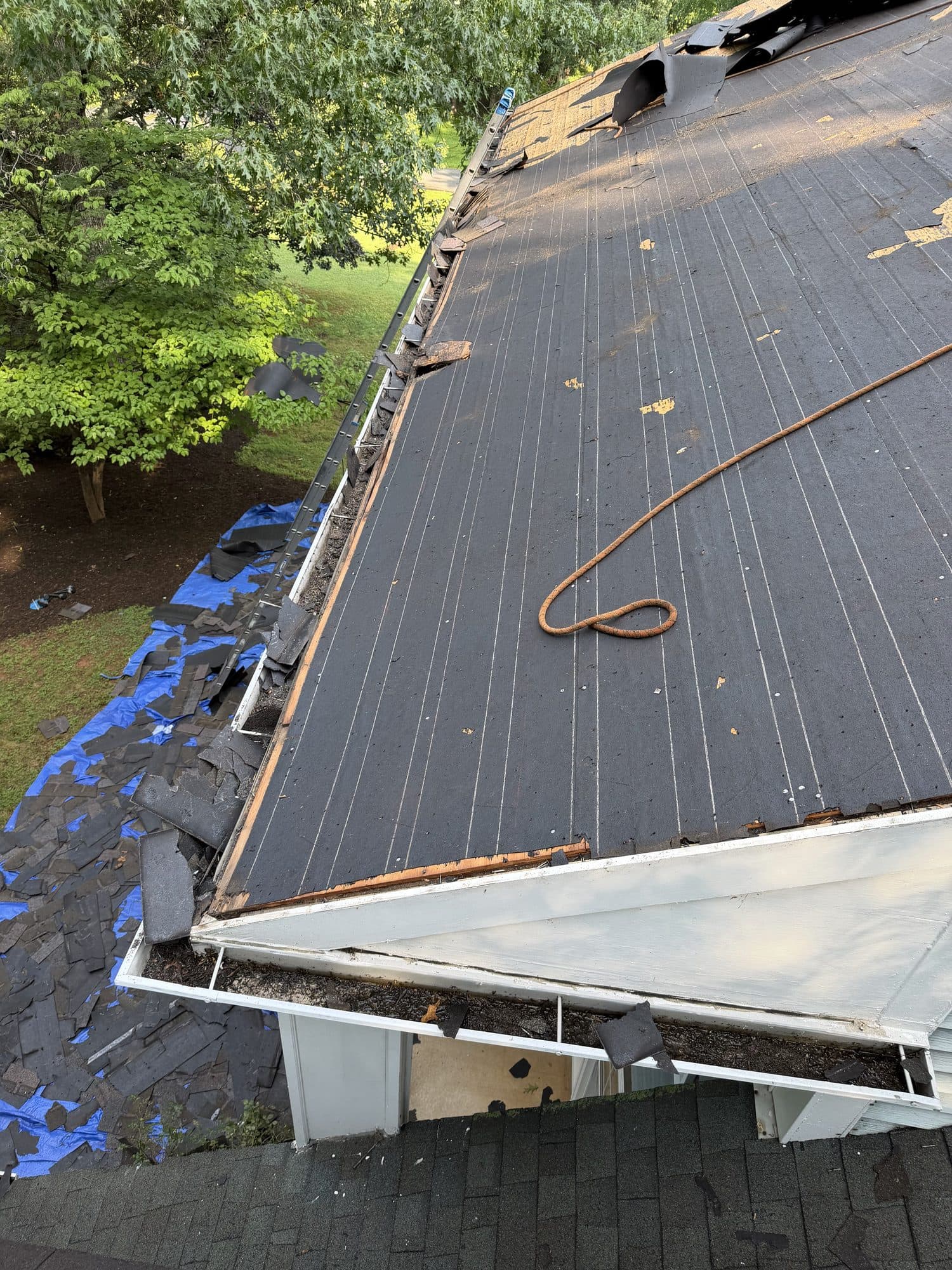
New decking on Roofing Roughnecks projects in Sterling and on a Herndon porch addition, and an exposed deck after tear-off in Reston.
Permits and decking
Fairfax County, which also serves as the building official for the Town of Vienna, lists replacement of less than 256 square feet (9 boards) of roof plywood as work that doesn't need a building permit, unless it must be fire rated, as on townhomes. Larger sheathing replacement is outside that exemption, so it's a reason to check the County's guidance and settle who handles any permit before work starts.
How decking shows up on the price
Decking repair is one of the biggest reasons the final cost of a roof replacement differs from a ballpark. The Roofing Roughnecks cost guide describes its mid-range replacement tier, $16,000–$28,000 as a typical Northern Virginia reference range, as including some decking repair, and its high-end tier as covering complex roofs and multi-layer tear-off. Your written scope should spell out how decking is handled.
- How is damaged decking identified, and will I see it before it's replaced?
- How is the replacement priced: per sheet, per board, per square foot?
- What happens if a rafter is damaged?
- Who handles a permit if the replacement area is large?
Related pages
Can you tell me exactly how much decking I need before tear-off?▸
No honest roofer can. An inspection can spot warning signs, but the full condition only shows once the old roof is off. The scope should explain how it will be handled.
Is it okay to put new shingles over soft decking?▸
No. Shingles need sound wood to hold their fasteners. Covering rotted decking just hides the problem under a new roof.
What causes decking to rot if the roof never leaked inside?▸
Slow leaks that soak into the deck and insulation before reaching a ceiling, and condensation from poor ventilation, can both rot decking without an obvious interior stain.
Does replacing decking need a permit?▸
Fairfax County lists replacing less than 256 square feet (9 boards) of roof plywood as not needing a permit, unless it must be fire rated. Larger replacement is worth checking against the County's guidance.