Why an inspection comes first
Most roofing regrets start before any work does: a replacement sold on age alone, or a quick patch on a roof that's failing everywhere. An inspection is how you avoid both, and it's the only way to write an honest scope. Satellite measurements, like the ones the Roofing Roughnecks instant estimate tool uses, are good for roof size and a ballpark price. They can't show a cracked vent boot, a loose chimney flashing or a soft spot in the deck.
What we look at
- Shingle condition across the roof: granule loss, cracking, curling, missing or lifted tabs.
- Chimney flashing, wall flashing and the joints where additions meet the original roof.
- Valleys, especially under trees where leaves collect.
- Penetrations: plumbing vents, exhaust vents and their boots or collars.
- Ridge, hips and eaves, including how water leaves the roof at the gutters.
- Signs of earlier repairs and whether they're holding.
- Ventilation, and attic signs of heat, moisture or leaks when the attic is accessible.
What an inspection on an older Vienna home looks for
The Town of Vienna's comprehensive plan describes a housing stock built mainly in the 1950s and 1960s. On homes that age, we pay extra attention to three things. First, the deck: sagging between rafters, or soft areas underfoot, can point to rotted boards that will need replacing at tear-off. Second, the chimney: masonry chimneys from that era often have flashing that's been sealed over rather than properly rebuilt. Third, additions: a family room or second story added in the 1980s or 2000s often meets the original roof at a different pitch, and that junction is a common leak point.
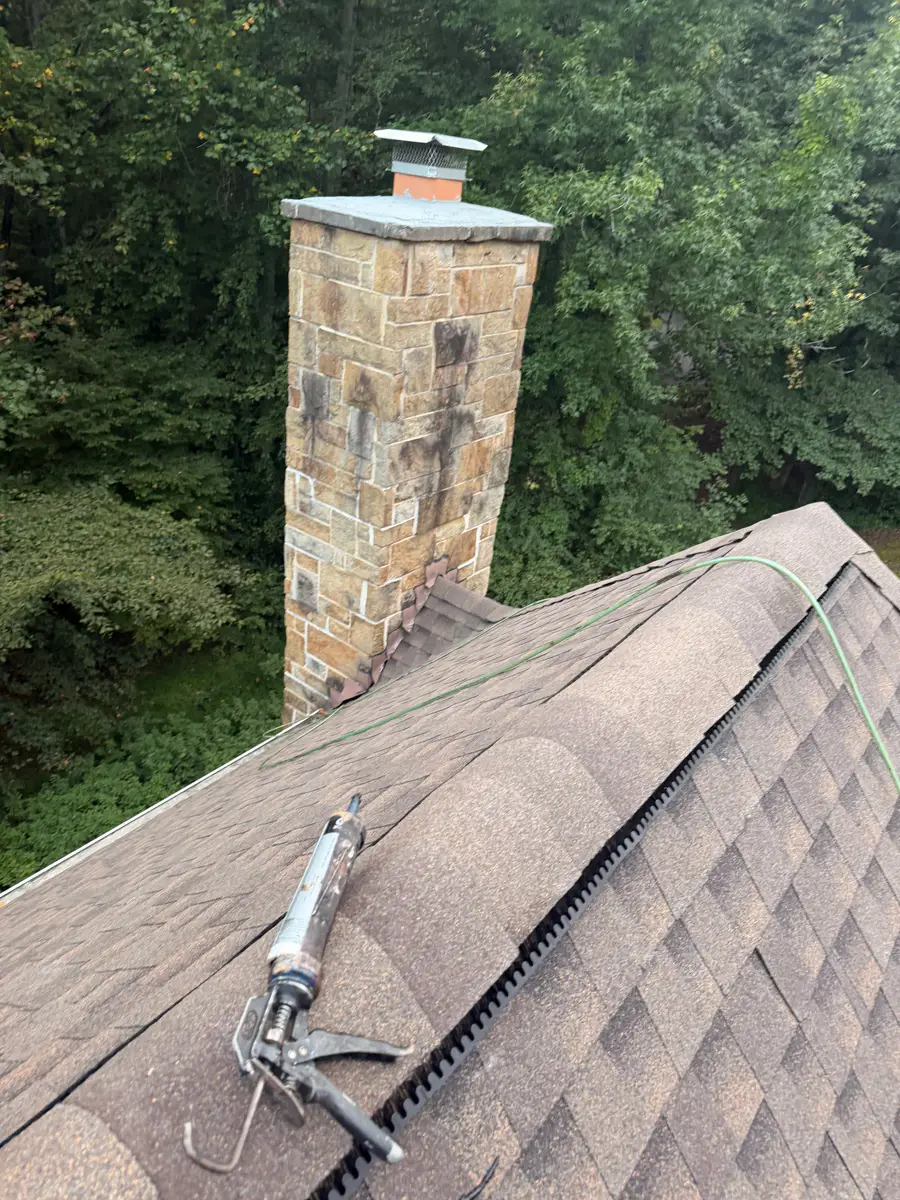
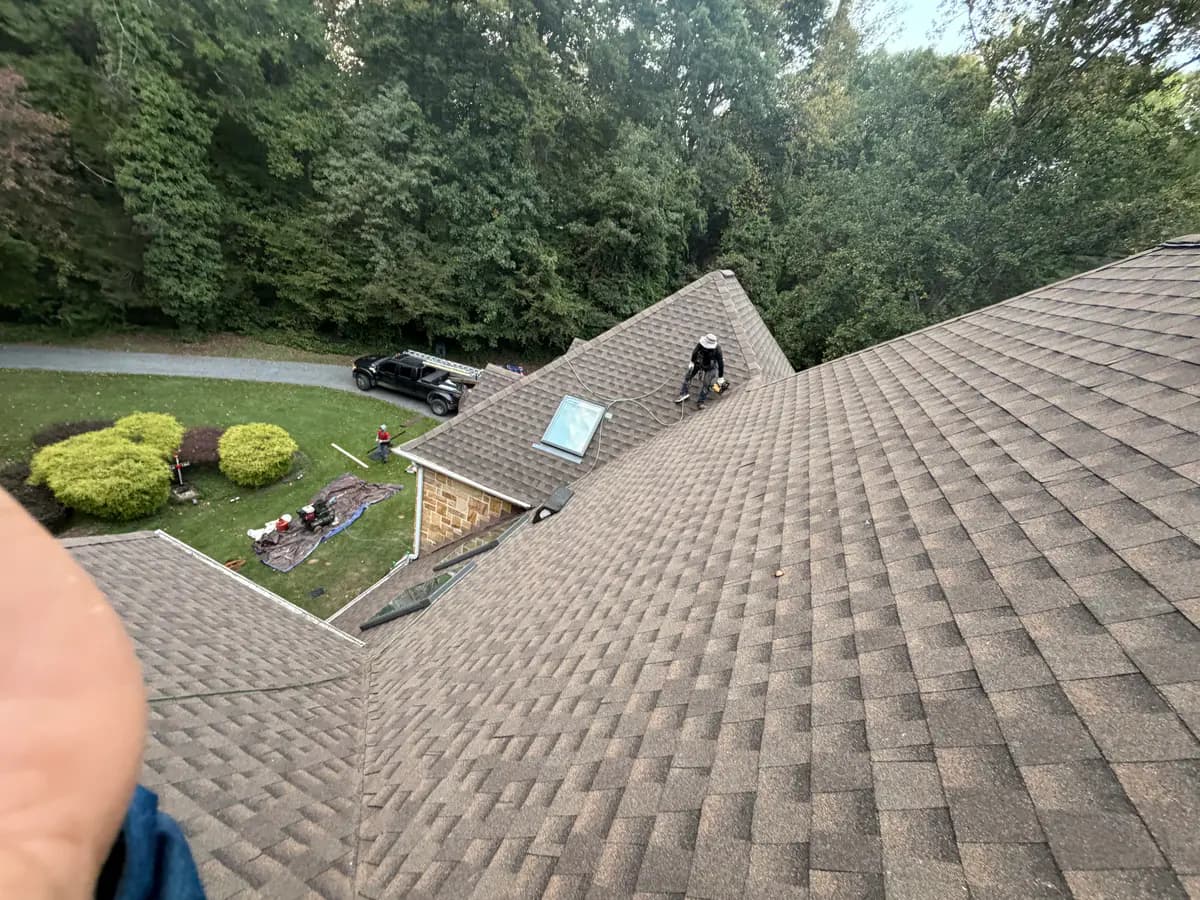
Chimneys and skylights, like these on a Roofing Roughnecks project in neighboring McLean, are two details every inspection checks closely, because that's where water most often gets in.
What you get afterward
You get a plain explanation of what we saw and what we recommend. If the roof needs work, the recommendation becomes a written scope listing what's included before anything starts. If it doesn't need work yet, we'll say so.
Good times to schedule one
- After a storm with high winds or falling limbs.
- When you see a ceiling stain, damp attic insulation or daylight through the roof boards.
- When shingles are curling, cracking or shedding granules into the gutters.
- Before buying or listing a home in Vienna.
- Before planning an addition that will tie into the existing roof.
- When the roof is approaching the age where asphalt shingles commonly wear out, 20 to 30 years.
Related pages
Do you get on the roof during an inspection?▸
When it's safe to do so, yes. Some details can only be judged up close. We won't walk a roof in conditions that make that unsafe.
Will you look in the attic?▸
When it's accessible and relevant, yes. The attic often shows leaks, decking problems and ventilation issues that aren't visible from outside.
Can an inspection tell me if my decking is rotted?▸
It can show warning signs, like sagging, soft spots or staining on the underside of the deck. The full picture only comes at tear-off, which is why the scope should explain how hidden decking damage is handled.
Is a satellite estimate enough?▸
It's a useful first step for roof size and a ballpark price. It can't judge shingle, flashing or deck condition, so it doesn't replace an on-site look.
Talk to a roofer about your Vienna home
Call (703) 731-9208, Monday – Saturday, 8:30 AM – 6:00 PM, or use the request-an-estimate page. We look at the roof first and put the recommended scope in writing before any work starts.
Request an Estimate