Why chimneys leak
A chimney is a big masonry box punched through the roof. Water running down the roof hits its upslope side, wraps around its sides, and has to be guided back onto the shingles below. Brick and mortar also absorb water and move differently from the wood roof around them. Flashing is the metal that bridges that gap. When it's installed well, it can outlast several roofs. When it's patched with sealant, it rarely lasts long.
The parts of chimney flashing
- Step flashing: individual L-shaped pieces woven in with each course of shingles along the chimney's sides.
- Counter flashing (cap flashing): metal set into the mortar joints of the chimney that laps down over the step flashing.
- Apron flashing: a piece across the downslope face of the chimney.
- Back pan or cricket: on the upslope side, a pan or small peaked structure that diverts water around a wider chimney.
The two-part system, step flashing tied to the roof and counter flashing tied to the masonry, is what lets the roof and chimney move independently without opening a gap.
Why older Vienna chimneys are trouble
Masonry chimneys are a familiar feature of the 1950s and 1960s homes that make up most of the Town of Vienna's housing, according to the Town's comprehensive plan. By now, those chimneys have usually been through two or three re-roofs. Common problems we see include: counter flashing that pulled out of deteriorated mortar joints; step flashing that was left in place and reused through more than one re-roof; a single piece of bent metal standing in for proper step flashing; and thick layers of roofing cement or caulk smeared over the joint, which crack as the house and roof move. Wide chimneys without a cricket can also hold water and debris on the upslope side, especially under trees.
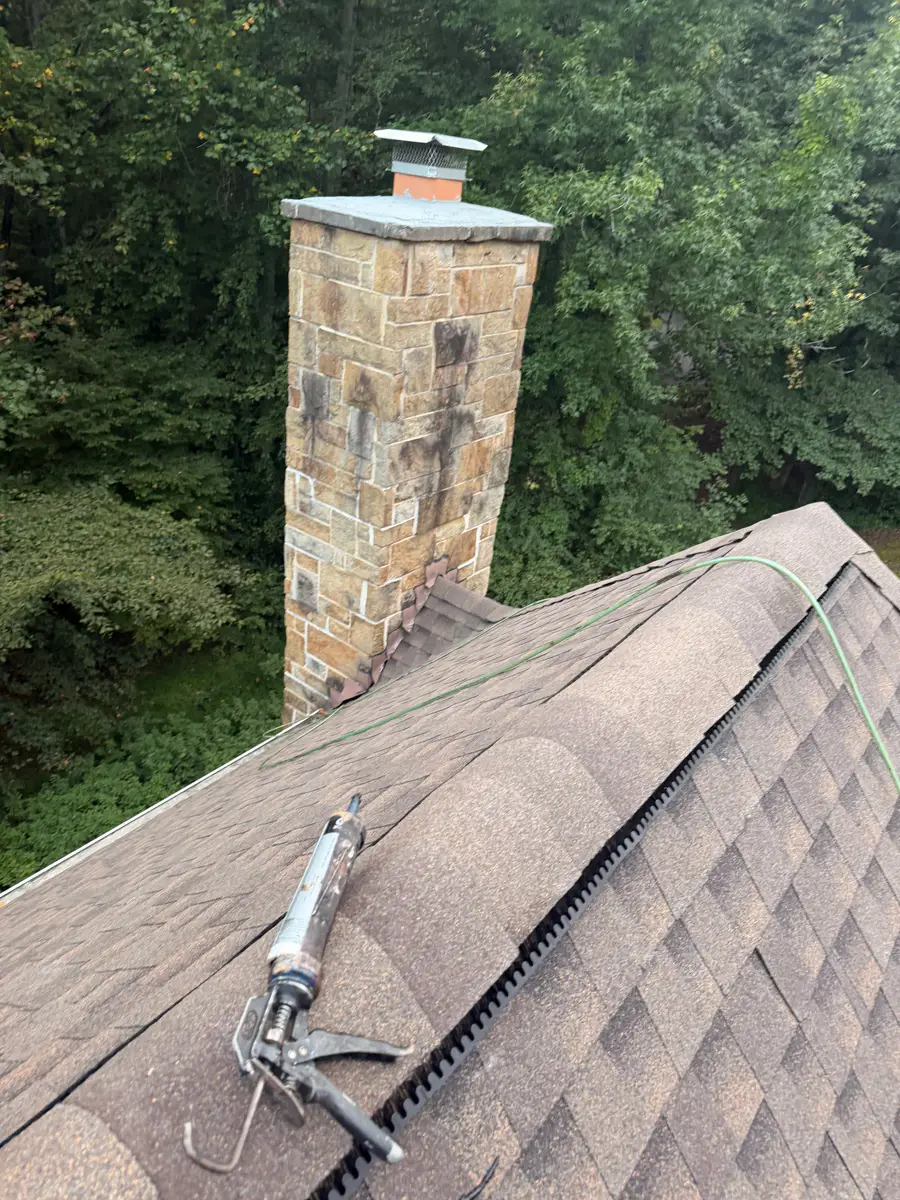
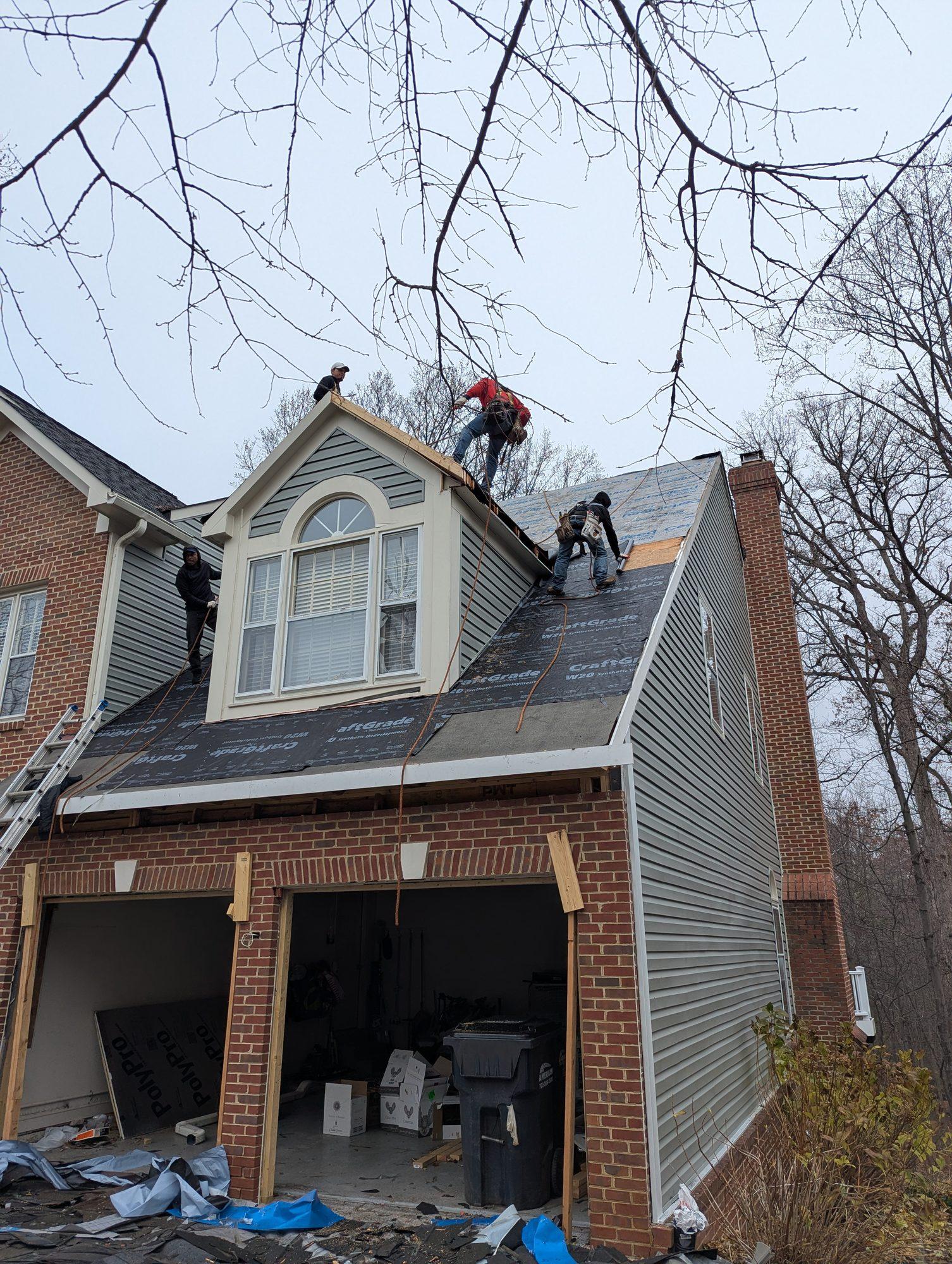
Chimney detail on a Roofing Roughnecks roof in McLean, and underlayment and flashing being worked around a dormer and chimney on a Reston re-roof.
What a proper fix looks like
On a full replacement, chimney flashing is best rebuilt with the new roof, because the step flashing has to be woven in with the new shingles course by course. The old flashing and sealant come off, underlayment is run up the sides of the chimney, new step flashing goes in with each course, and counter flashing is set into the mortar joints. Where the chimney is wide enough to trap water, a back pan or cricket is part of the conversation. On a repair, the same principles apply on a smaller scale.
Flashing can only be as good as the masonry it's tied into. If the mortar joints are crumbling or the chimney crown is cracked, water can get in above the flashing. Those are masonry repairs rather than roofing work, so we'll tell you if we see them and you can decide how to handle them.
Signs your chimney flashing is failing
- A stain on the ceiling or wall next to the chimney, often worse after wind-driven rain.
- Damp or darkened wood on the rafters or deck around the chimney, seen from the attic.
- Visible gaps where the metal meets the brick, or counter flashing that has pulled loose.
- Thick, cracked layers of tar or caulk where flashing should be.
- Rust streaks on the brick below old metal flashing.
- Leaves and debris piling up on the upslope side of the chimney.
Not every chimney-area stain is a flashing failure. Water can also come through porous brick, a cracked crown or a missing chimney cap, and condensation inside an old flue can stain the wall around it. That's why an inspection looks at the masonry and the attic, not only the metal. If the source turns out to be the chimney itself rather than the roof, we'll say so instead of selling you roofing work that won't stop the leak.
Permits
Fairfax County, the building official for the Town of Vienna as well as the surrounding county, lists chimney repairs among the miscellaneous residential work that needs a permit. If your project includes chimney work beyond the flashing, check the County's guidance and settle who handles any permit.
Questions to ask about your chimney
- Will the step flashing be replaced, or reused?
- Will counter flashing be set into the mortar joints or surface-mounted?
- Does this chimney need a cricket or back pan?
- Did you see any masonry problems I should know about?
Related pages
Can't you just seal around the chimney?▸
Sealant can stop a drip temporarily, but it cracks as the roof and chimney move. A lasting fix is properly installed step and counter flashing.
Should chimney flashing be replaced with a new roof?▸
Usually, yes. Step flashing is woven in with the shingles, so replacing the roof is the best opportunity to replace it correctly.
My chimney is no longer used. Does it still need flashing?▸
Yes. As long as it passes through the roof, it needs to be flashed. Whether to remove an unused chimney is a separate masonry decision.
What's a cricket?▸
A small peaked structure on the upslope side of a wide chimney that splits water around it, so water and debris don't pool against the masonry.