
Vienna and its trees
The Town of Vienna's comprehensive plan sets a goal to protect and enhance the existing tree canopy in its residential neighborhoods, and notes that redevelopment can cause loss of tree cover. Many older lots have large trees that are as old as the houses, and plenty of them hang over roofs. That's not a reason to cut them down, but it is a reason to understand what they do to a roof.
Four ways trees damage roofs
1. Limb strikes
A falling limb can crack or puncture decking, break rafters in severe cases, and tear shingles and flashing. Even a modest branch can break shingle seals or crease shingles where it lands. Damage isn't always visible from the ground.
2. Abrasion
Branches that rest on or brush against the roof scrape granules off shingles in wind, wearing them out early in one spot.
3. Debris in valleys and gutters
Leaves, needles and seed pods collect in valleys, behind chimneys and in gutters. Packed debris holds water against the roof and can back it up under shingles at the eaves, which over time rots the deck and fascia.
4. Shade and moisture
Heavily shaded roof slopes stay damp longer after rain. That encourages moss and algae, which hold moisture against shingles. Algae streaks are mostly cosmetic; moss growing under shingle edges is not.
What to do after a limb hits your roof
- Stay off the roof and away from any downed lines.
- Have a tree professional remove large limbs. Dragging a limb off can tear more of the roof.
- Photograph the roof and any interior water, with dates.
- Catch drips and move belongings where it's safe.
- Call your insurer, then get the roof assessed and documented.
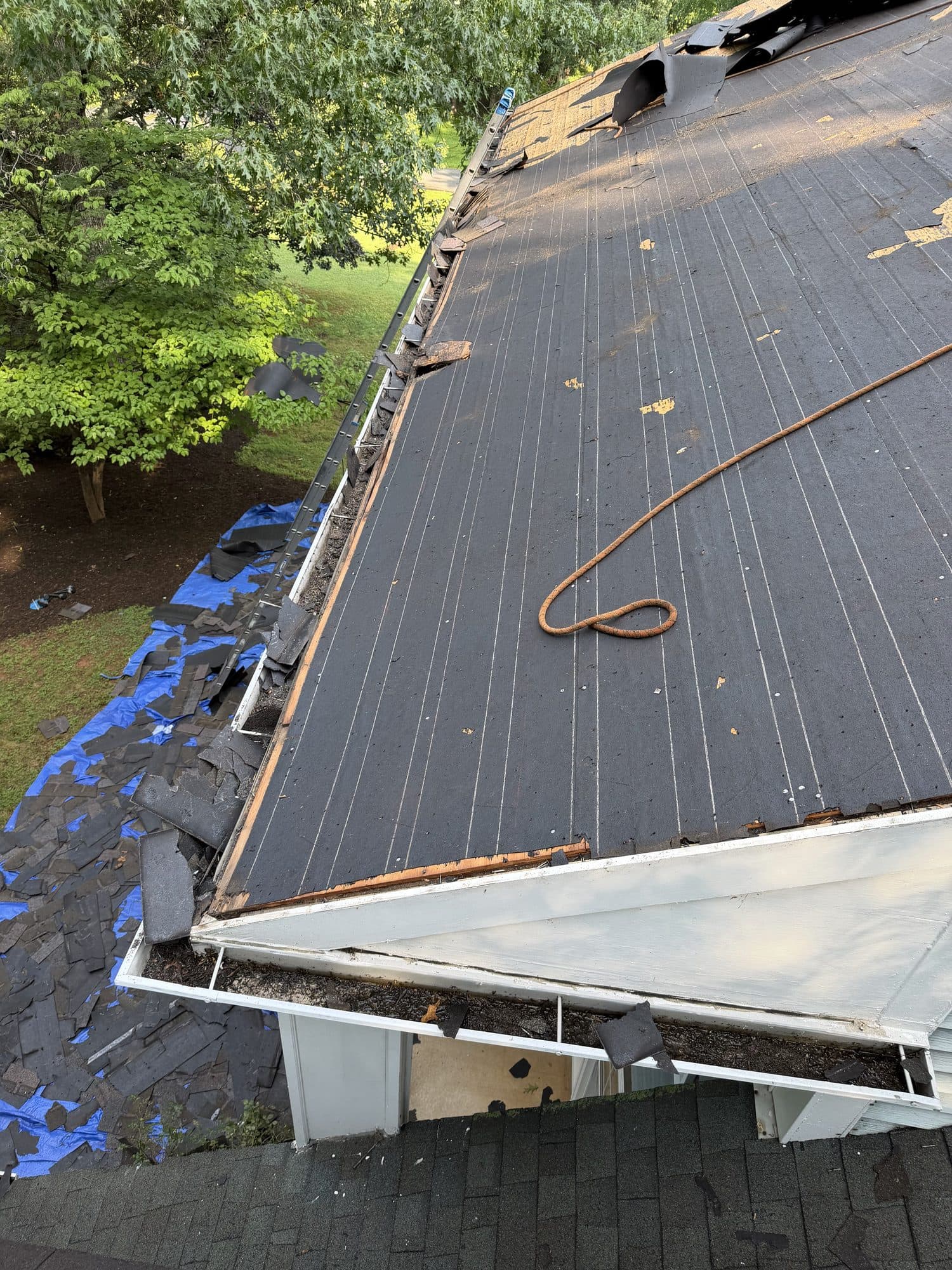
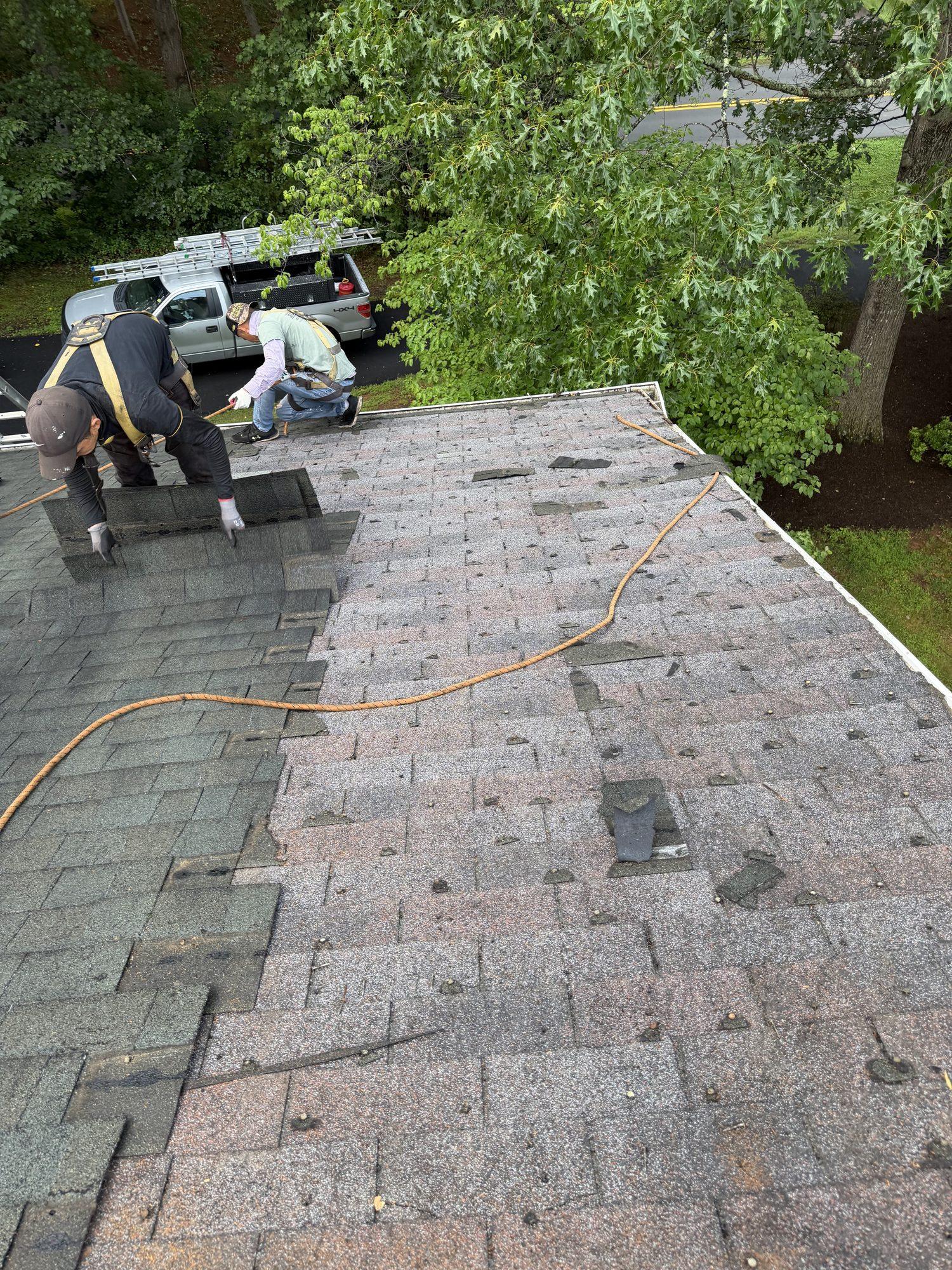
An exposed deck after tear-off, with old debris caught on a tarp, and tear-off in progress, both on Roofing Roughnecks projects in Reston. After a limb strike, the deck is where the hidden damage usually is.
Protecting a roof under trees
- Keep branches trimmed back from the roof by a qualified tree professional; we don't do tree work.
- Clean gutters and valleys, especially after leaves drop in fall.
- Consider gutter guards. Roofing Roughnecks installs Leaf Relief gutter guards, designed to keep leaves out while letting water through.
- On a replacement under heavy shade, ask about algae-resistant shingle options in the lines we install.
- Get the roof looked at after any significant storm, even if nothing is leaking yet.
If you're weighing whether a particular tree near the house is a risk, that's a question for an arborist rather than a roofer. What we can tell you is what the roof under it looks like: whether the shingles on that slope are wearing faster, whether the valley below it is holding debris, and whether the deck shows signs of past impacts.
Damage that hides
The tricky thing about tree damage is how much of it stays out of sight. A limb that bounced off the roof may have cracked the deck underneath an intact-looking shingle. Debris packed in a valley can rot the deck under it for years before a stain appears inside. Granule loss from a rubbing branch shows up first as dark granules in the gutter, not as a leak. If your roof sits under large trees, look at the gutters and downspout outlets after storms for heavy granule loss, and at the attic for new stains or damp insulation. An inspection after a significant storm costs far less than finding the problem in a ceiling.
Planning a roof replacement around trees
Trees also affect the work itself. Overhanging limbs can make it harder to stage materials and run debris off the roof, and landscaping under the drip line needs protecting. If trimming is planned, doing it before the new roof goes on avoids dropping limbs on new shingles. The Town of Vienna has its own rules on trees for development projects, so if you're planning tree removal as part of a larger project, check with the Town.
Related pages
A branch fell on my roof but nothing's leaking. Should I have it checked?▸
Yes. Cracked decking and broken shingle seals often don't leak right away, then show up in the next heavy rain.
Do you remove trees or limbs?▸
No. Tree work should be done by a qualified tree professional. We handle the roof.
Is moss on my roof a problem?▸
It can be. Moss holds moisture against shingles and can lift their edges. Algae streaks are mostly cosmetic.
Will gutter guards stop all debris problems?▸
They reduce gutter clogging, but valleys and the areas behind chimneys can still collect debris and should be checked.